Holistic student support model grows to 1,000+ Students as graduation rates hit record highs
Transforming Student Success at Harper College with One Million Degrees

the challenge
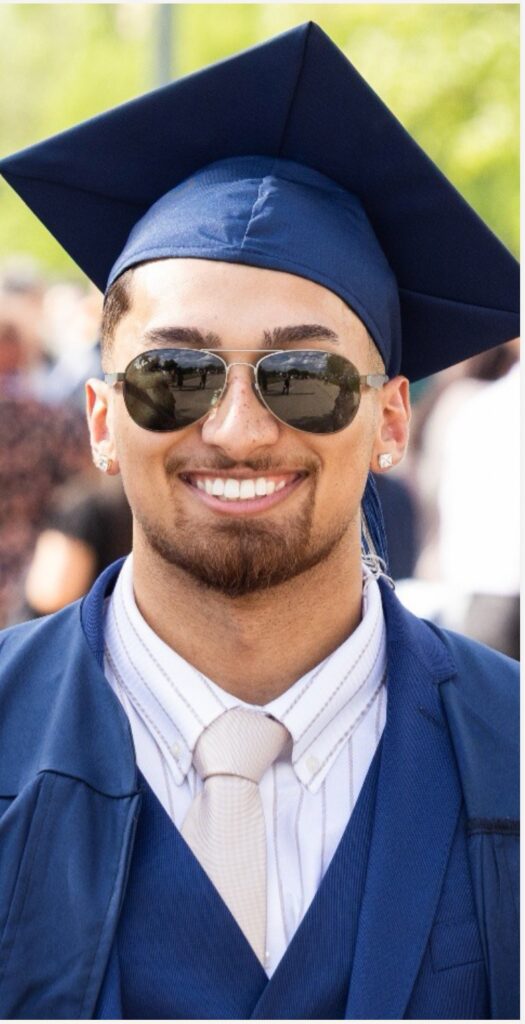
When Santiago Soto broke his hand, the injury put hiscollege plans and his future in jeopardy. The Harper Collegestudent who’s studying international business lives alone,works full-time, and juggles a heavy course load. His injuredhand meant he had to take time off from work, which meantmissing out on the paychecks that paid his bills and fund afast-approaching study abroad program in Germany.
Santiago’s story is not an unusual one at Harper. Since itsfounding in the late 1960s amid the rapid growth of Chicago’ssuburbs, Harper has embraced the mission at the heart ofAmerica’s community colleges: to open the doors of highereducation to all who are ready to walk through them.
“Many of these students are justone injury, car crash, or missedpaycheck away from seeing theircollege dreams derailed”
From its 200-acre campus in Palatine, Illinois — about 30miles northwest of Chicago — Harper has become a fixturein the region. Its classrooms and hallways bring togethermore than 21,000 students each year — recent high schoolgraduates, mid-career adults retraining for new careers,and first-generation students balancing work, family, andcoursework. About half of Harper’s students identify asHispanic, Asian American, or African American. 31 percentare eligible for Pell Grants, and nearly 70 percent attendpart-time. Most Harper students plan to transfer to a four-year college or university to complete their degrees. Manyof these students are just one injury, car crash, or missedpaycheck away from seeing their college dreams derailed.
A decade ago, shifting demographics and rising suburbanpoverty across Harper’s district meant more studentsfaced more challenges. In the years since, the college hasinvested heavily in student success initiatives.
Through its Hawks Care program, students can access mental health counseling, transportation assistance, food pantries, clothing closets, and access to laundry facilities. But many studentsdidn’t take advantage of these supports because theyoften didn’t know these resources existed. Harper leadersviewed the issue not as a lack of services but as a lack ofconnection. Students didn’t always know where to turn, andoverburdened advisors didn’t have the bandwidth to guidethem. “In the past, our advising was stretched thin,” saysAnita Vaughan, a Harper advisor. “Sometimes one advisorhad 800 students. Given how many of our students are first-generation or from low-income communities, that’s not thekind of high-touch support they need. Students would come to campus and not even know what was available to them.”
Harper officials knew they needed to ensure that morestudents like Santiago could get the help they needed. Theydiscovered the solution in One Million Degrees, a Chicago-based nonprofit dedicated to helping community collegestudents thrive.
the challenge
Founded in Chicago in 2006, One Million Degrees (OMD)supports more than 2,000 community college studentseach year through a wraparound support model thatincludes one-on-one coaching, career mentoring, financialstipends, and professional development. OMD primarilyserves first-generation students, students from low-incomecommunities, and students of color through a unique place-based partnership operated in collaboration with CityColleges of Chicago. The results speak for themselves.
Traditionally, OMD’s model places staff on partnercampuses. In this instance, OMD team members werehired as Harper College employees, giving them directaccess to the college’s technology, databases, and day-to-day processes. This made it easier to respond quickly tostudents’ needs and offer timely hands-on support.
For more than a year, Harper and OMD staff members metweekly to align the program’s structure, goals, and workflows.This work resulted in a more personalized experience forstudents that was marked by smaller advising caseloads,consistent one-on-one meetings, proactive connectionsto important resources, and a cohort-based approach thatbrought students together rather than supporting them inisolation.
OMD provided each participating Harper student with afinancial stipend of up to $750 per year, plus access to anenrichment grant of up to $250. Students served by OMDalso took part in a professional development curriculumfocused on career readiness, financial literacy, and personalidentity. Harper also created a weekly non-credit seminarclass that provides consistent touchpoints with studentswithout impacting their financial aid status. The class alsofunctioned as an informal wellness check. If a student missesthe seminar, it signals to staff that outreach may be needed.
“These are students who haven’t always had someone in their corner. Now they do”
“Harper moved away from transactional advising tosomething more relational,” says Tim Grant, an advisorwith One Million Degrees. “These are students whohaven’t always had someone in their corner. Now they do.”
THE SOLUTION
Today, the OMD model is more than a one-off initiative.It’s part of Harper’s student success infrastructure. To bettersupport a greater population of students, Harper has scaledits efforts and consolidated OMD and additional supportprograms by creating the SOAR+ Program. This newprogram is built upon the framework of OMD and severalexisting programs to provide students with an “inescapableopportunity” to incite long-term success. SOAR+ willsupport more than 1,000 students per year and is backed bya $2 million investment from the college.
Inspired by the program’s success, Harper restructuredits entire advising model around OMD’s approach to casemanagement. The core OMD principles—cohort-basedsupports, career coaching, financial stipends, faculty andpeer mentorship—will be all be vital components of thenewly scaled, Student Success Model which will launch inSpring of 2026, and will continue each academic year as acomprehensive first-year experience program to bolsterstudent outcomes.
Although not every college has adopted the OMD modelat this scale, it’s a direction the organization hopes moreinstitutions will take. “What we’ve done at Harper becamea foundation for what we’re doing with other colleges,”says Melanie D’Evelyn, executive director of advisory andcapacity building at OMD. “The leadership there was deeplycommitted. They really took this model and made it theirown.”
For Harper students, the impact is deeply personal and oftentransformational. Dr. Dennis Baskin, Harper’s associateprovost of student affairs, argues that what makes themodel so impactful is a sense of belonging. “The programreally helped students believe they could be successful at acommunity college, especially students of color and thosefrom low-income backgrounds,” he says. “That belief is acritical part of persistence.”
“Over the past decade, Harper College has nearly doubled its overall graduation rates through a sustained focus on student success—including investments in advising, academic support, and external support partners.”
Harper’s investment in the OMD model has paid off. In 2016,OMD partnered with the University of Chicago’s Urban Labsto evaluate its impact through a randomized controlled trialthat included Harper College. Early results showed increasedfull-time enrollment and first-year persistence. A later studypublished in 2021 found significantly higher three-yeardegree attainment for students served by OMD. In fiscalyear 2021, OMD students at Harper achieved an 89 percentfall-to-spring persistence rate. Over the past decade, overallgraduation rates at Harper have increased from 26 percentto 47.6 percent.
The program’s benefits go beyond persistence andcompletion. OMD is preparing students for life after Harperby helping graduates secure meaningful employment withstrong wages after graduation. “If we want to talk about areal framework for student success, start here,” says Dr.Ruth Williams, Harper’s provost. “It’s about meeting students’needs — academic, financial, and personal — in oneintegrated approach.”
It’s a sentiment echoed by students like Santiago. Throughsupport from Harper and OMD, he received food assistance,gained access to emergency financial aid, and salvaged histrip to Germany. Just as importantly, he found a space tobreathe.
“Sometimes I’d just go to the OMD room to relax beforework, grab a snack, talk to people,” he says. “It’s a reallyfriendly, welcoming place. It makes you feel like you’renot alone.”